
![[MANUAL IMAGE PLACEHOLDER — HERO IMAGE] Elegant editorial photo of a calm dog laying down](https://images.unsplash.com/photo-1543466835-00a7907e9de1?auto=format&fit=crop&w=1200&q=80)
What Does It Mean When a Dog Won't Eat?
A sudden shift in your dog's appetite can be deeply concerning. While a single skipped meal might simply point to a passing mood or minor digestive rest, a persistent refusal of food demands careful observation and an understanding of underlying physiological and psychological triggers.
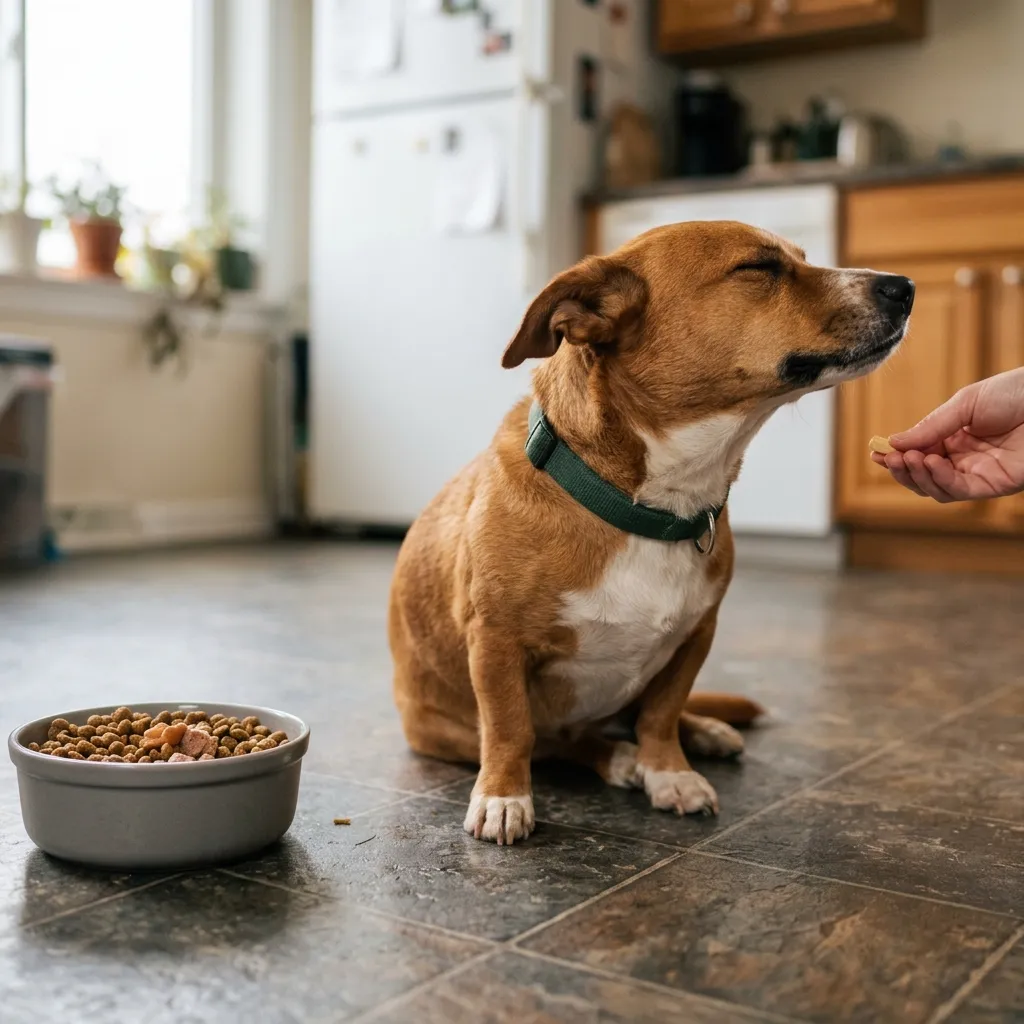
Veterinarians draw a critical distinction between a temporary decrease in appetite—often caused by minor digestive upsets, heat, or mild pickiness—and a significant, sustained loss. There is also a major diagnostic difference between a dog who *wants* to eat but has difficulty physically consuming food (often accompanied by whimpering or dropping kibble) and a dog who completely *refuses* food, showing zero interest in even their favorite high-value options.
Common Cause #1
Illness or Feeling Unwell
Just like humans, dogs refuse food when they are physically suffering. Systemic issues such as gastrointestinal infections, acute pancreatitis, organ dysfunction, or localized infections frequently manifest first as appetite suppression. However, it is crucial to remember that a lack of appetite is a clinical symptom, not a standalone diagnosis. It serves as a vital warning sign that your dog's immune system or digestive tract is actively managing an underlying stressor or illness.
Common Cause #2
Dental Pain or Difficulty Eating
Sometimes, the issue isn't a lack of hunger, but the physical pain of eating. Periodontal disease, fractured teeth, oral tumors, or inflamed gums can make chewing dry kibble excruciating. Watch closely for warning signs: dropping pieces of food back into the bowl, chewing gingerly on one side of the mouth, sudden bad breath, or an immediate preference for soft canned food over hard treats. If your dog approaches the bowl eagerly but backs away after the first bite, dental discomfort is highly likely.
Common Cause #3
Stress, Anxiety, or Major Life Changes
Dogs are creatures of habit who thrive on predictability. Major environmental disruptions—such as relocating to a new home, welcoming a new pet or family member, or even a sudden change in your daily work schedule—can trigger severe situational anxiety. This psychological distress directly impacts their nervous system, shutting down the digestive drive. Recognizing that appetite loss can be emotional helps you respond with patience, routine restoration, and comfort rather than medical panic.
Veterinary Insights in Your Inbox
Join our thoughtful editorial circle. We send calm, scientifically backed guides for home canine care and nutrition once per month.
![[MANUAL IMAGE PLACEHOLDER — EMERGENCY CHECKLIST]](https://images.unsplash.com/photo-1548199973-03cce0bbc87b?auto=format&fit=crop&w=1200&q=80)