
PREY DRIVE & BEHAVIOR
How to Stop Your Dog From Chasing Cats: Training Tips That Work
Every dog possesses some level of natural prey drive, but chasing behavior often stems from an over-excited state of mind. Redirecting this instinct requires patience, high-value rewards, and consistent focus building. By training your dog to remain calm and look at you in the presence of a feline friend, you can replace the impulse to chase with a relaxed, cooperative focus on you.
Explore Training Guide
Key Takeaways
- Chasing is natural
- Prevention is first
- Cats need safe spaces
- Train at a distance
- Reward calm behavior
- 'Leave it' and 'Watch me' are key
- Professional help for severe cases
Why Do Dogs Chase Cats?
While it is a classic trope that dogs and cats are natural enemies, the urge to chase is rarely driven by pure malice. For most canines, this behavior is deeply rooted in evolutionary instincts. Prey drive plays a massive role—certain breeds are hardwired to pursue fast-moving objects. Others, like collies, are motivated by herding instincts, attempting to control the movement of their feline housemates. Curiosity and a simple desire for play can also trigger a chase. Ultimately, motivations vary widely from dog to dog. Understanding the core driver behind your dog's impulse is the first step toward building a harmonious, safe environment for both pets.

COEXISTENCE & SAFETY
Why You Should Stop the Chasing Behavior
Allowing a dog to chase a cat is highly volatile. What might look like active play can quickly cascade into predatory stress, placing both animals in immediate physical and psychological danger.
Physical & Emotional Risks
Chasing activates predatory drift, a state where a dog perceives the cat as prey. Highly elevated arousal levels raise the risk of sudden, severe injuries, permanently fracturing the household trust.
The Reality of Cat Stress
Constant chasing subjects cats to chronic stress. This biological threat response triggers severe behavioral changes, litterbox avoidance, anxiety disorders, and stress-induced physical illnesses.
Safety & Prevention First
Proactive steps are mandatory. Install tall, secure gates and high vertical shelves to allow cats escape routes, while simultaneously practicing strict redirection training with your dog.
COHABITATION BASIC TRAINING
Start With Management: Prevent Your Dog From Practicing the Chase
Before you begin core behavioral training, you must completely stop the self-rewarding habit of high-arousal chasing. Strategic barriers and setup choices are your best tool to establish immediate, stress-free harmony.
- Baby Gates & Barriers: Physically section off run routes to break the automated chase reflex.
- Elevated Escape Zones: Utilize tall cat trees, wall ledges, or high shelves to provide cats vertical safety.
- Mindful Supervision: Keep eyes-on control with leash lines, or use secure crates when you step away.

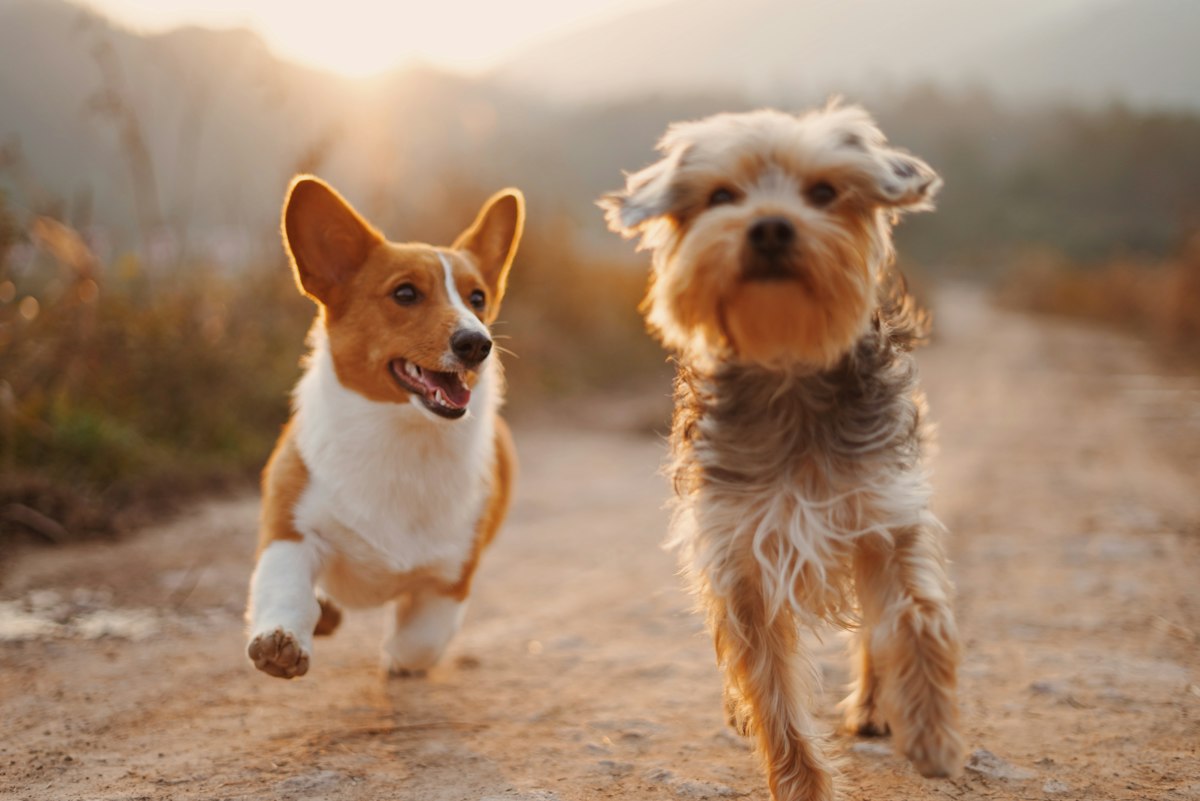
Teach Your Dog That Seeing the Cat Predicts Good Things
Through positive reinforcement and gradual exposure, you can reshape your dog's instinctual reactions. By rewarding calm behavior at a safe distance where your dog can see the cat without reacting (the 'under-threshold' sweet spot), you build a powerful positive association. Over time, the cat's presence transforms from an exciting trigger into a reliable cue that delicious treats are on the way.
This process relies on counter-conditioning: gradually reducing the distance while maintaining complete calm. Remember, patience is key. If your dog reacts, simply increase the distance and try again. Consistency creates a harmonious home where both pets can thrive.
Read Full Training GuideTeach “Watch Me” to Redirect Your Dog’s Attention
Before expecting your dog to ignore a moving cat, you must build a bulletproof attention trigger in low-distraction zones. Here is how to train eye contact step-by-step.
Establish the Marker in a Quiet Room
Find a completely distraction-free room. Say your dog's name or 'Watch Me' in a warm tone. The absolute split-second they glance at your eyes, mark with an enthusiastic 'Yes!' and immediately reward with a high-value treat.
Introduce the Eye Lure
Hold a treat between your fingers near your dog's nose, then draw it in a straight line up to the bridge of your nose. Once they make eye contact, say 'Yes!' and reward. Gradually phase out the treat movement so they respond purely to the verbal cue.
Add Low-Level Distractions
Drop a low-interest item, like a boring toy, a few feet away. The moment your dog looks at the toy, cue 'Watch Me'. If they turn their gaze away from the toy to look at you, mark with a high-value treat. They are learning that looking at you yields better rewards.
Controlled Cat Exposure
Position your dog on a leash at a safe distance from a baby-gated or crated cat. The moment they notice the cat *but before* they stiffen or bark, cue 'Watch Me'. Mark and treat generously when they break gaze with the cat. Slowly reduce distance over multiple sessions.
COEXISTENCE FOUNDATIONS
Teach “Leave It” Before Using It Around Cats
Before introducing your canine companion to a feline household member, they must master the core 'Leave It' cue. This behavioral cornerstone ensures they can reliably redirect their attention away from high-value, highly stimulating triggers upon command. The secret lies in a gradual, structured training ladder—beginning exclusively with static, low-value items inside a controlled environment long before a cat enters the frame.
- Step 1: Start with a low-value kibble hidden inside a closed fist. Reward only when they stop sniffing.
- Step 2: Graduate to a flat, open hand, quickly covering the treat if they attempt to snatch it.
- Step 3: Place the low-value object directly on the floor, using your foot to cover it if necessary.
- Step 4: Practice dropping treats from standing height, insisting on absolute eye contact before reward.

Build a Reliable Recall
- Irresistible high-value rewards
- Low-distraction indoor environments
- Never chase a runaway puppy
A bulletproof recall is the single most important safety cue you can teach your dog. The secret lies in making the return to you the most rewarding event of their day. Ditch the standard kibble and reach for high-value motivators—think baked chicken breast, freeze-dried liver, or real cheese. These jackpots create a powerful positive association, teaching your dog that choosing you over the environment always pays off.
Always set your pup up for success by practicing in low-distraction environments first. Start in a quiet hallway inside your home, then move to the backyard, and only progress to the park once the response is instantaneous. If you test them in a busy park too soon, you teach them that they can safely ignore your cue.
What If Your Dog Chases the Cat During Training?
A sudden chase can disrupt training progress and compromise safety. If your dog breaks focus, act immediately and calmly with this clear three-step recovery sequence:
- Prioritize Safety: Step between them immediately to break line of sight. Gently guide your dog away using a pre-attached house line.
- Calm Separation: Move your dog to a separate room. Avoid scolding, as negative energy increases arousal; let both animals settle down completely.
- Review the Trigger: Evaluate the cause. Were they too close? Was the cat too active? Adjust your setup, increase distance, and restart only when calm.
Consistency is key. Building safe, long-term harmony takes patience, structured boundaries, and absolute safety above all else.
When Should You Get Professional Help?
While standard puppy behaviors like playful nipping or typical exploration are normal steps in development, certain complex reactions require immediate, professional intervention. Navigating high-stress behaviors alone can inadvertently reinforce patterns that become significantly more challenging to address as your dog matures.
We strongly recommend partnering with certified positive-reinforcement trainers. True behavioral growth is built upon scientific learning principles, mutual trust, and valuable rewards—never physical intimidation, startle techniques, or outdated dominance-based paradigms.
Find Certified Positive TrainersBehavioral Red Flags
- Severe Grabbing & Resource Guarding: Stiffening, growling, or snapping when approached with toys, food, or resting spaces.
- Forced Pinning or Physical Suppression: Reacting aggressively to physical restraint, or seeking to physically suppress other pets.
- Persistent Fear & Anxiety: Consistent hiding, trembling, or panic when encountering standard everyday sounds or objects.
Note: Look for credentials such as KPA CTP, CTC, or IAABC. A qualified modern professional will never advocate for physical punishments or dominance theories to 'fix' behavioral challenges.
The Calm Around Cats Training Ladder
01
Scent
Introduce cat-scented items like blankets to your dog's space, building a positive, quiet association first.
02
Distance
Begin visual work at a far distance where your dog remains under threshold, completely calm and unbothered.
03
Look Back
Reward your dog for glancing briefly at the cat, then voluntarily looking back at you with relaxed focus.
04
Watch Me
Build strong engagement on cue, requiring sustained attention on you instead of tracking the cat.
05
Leave It
Establish deep impulse control. Reward the deliberate choice to ignore feline presence and turn away.
06
Movement
Maintain your training parameters while the cat is physically moving, jumping, or actively playing.
07
Closer
Under strictly managed supervision, allow close proximity while heavily rewarding neutral, relaxed body posture.

Consistency is key. Progress through each phase slowly, only moving forward when your dog is completely relaxed.
CANINE COGNITION & BEHAVIOR
Read Your Dog Before the Chase Starts
A physical chase is never a sudden impulse—it's the culmination of four distinct biological escalation zones. Learning to identify these subtle shifts in posture allows you to step in while your dog is still listening.
Figure 2.1: Visual markers of predatory escalation. Notice the tension lines shifting from the ears to the base of the tail as focus narrows.
The Four Levels of Chase Escalation
Stage 1: Relaxed & Curious
Body Language: Soft eyes, loose wagging or natural tail height, relaxed neutral ears, and a slightly open mouth. Your dog registers the cat but remains responsive to their environment.
Owner Action: Mark and Reward. Give a premium, high-value treat immediately when they look at the cat and look away voluntarily. This builds a baseline of calm association.
Stage 2: Alert Engagement
Body Language: Mouth closes suddenly, ears tilt forward, and body weight shifts onto the front paws. The tail is held parallel to the ground, possibly slow-wagging or tense.
Owner Action: Active Redirection. Use a happy, non-confrontational recall command like 'Let's Go!' and walk in the opposite direction. Do not wait for the stare to harden.
Stage 3: High Fixation
Body Language: Completely stiffened posture, unblinking hard-focused stare, tail vibrating high in the air, and shallow, rapid breathing. The dog is now 'locked-on'.
Owner Action: Emergency Break. Do not yank directly backwards (this triggers the opposition reflex to run forward). Instead, step in front of your dog's eyes to break line of sight, and gently guide them away sideways.
Stage 4: Predatory Lunge
Body Language: Vocalizing (high-pitched barks/whines), lunging forward against the leash, completely unresponsive to physical touch, commands, or food.
Owner Action: Exit & De-escalate. Safely remove your dog from the room immediately. Do not yell or punish; their nervous system is in full flight-or-fight and cannot process training cues. Re-evaluate trigger distance.
Dog & Cat Safety Checklist
A harmonious home is built with patience and structure. Follow these twelve vital principles to secure absolute peace of mind while introducing and managing your pets' shared lifestyle.
12 Pillars of Pet Safety
- Designated Safe Zones
- Active Supervision Only
- Tall Protective Gates
- Reliable Verbal Cues
- Scent Exchange Rituals
- High-Value Distractions
- Completely Separate Feeding
- Protected Litter Access
- Gradual Stage Introductions
- Calming Pheromone Use
- Unblocked Escape Routes
- Read Body Language Signals
Expert Training & Behavior Advice
Frequently Asked Questions
Navigating the dynamics between your canine and feline companions can be challenging. Read our curated expert advice on safety, instinct, distance training, and professional guidance.
Why does my dog chase my cat, and is it always aggression?
Dogs are naturally hardwired with predatory sequence traits. Chasing is often motivated by play, instinctual prey drive, or absolute excitement rather than direct malice. However, even instinctual chasing can rapidly escalate into predatory behavior. Understanding your dog's physiological cues is essential to differentiating high-energy play from genuine hunting drive.
Should I physically punish my dog when they chase or lunges?
No, physical punishment or intense verbal scolding is highly counterproductive. It creates negative associations, causing your dog to perceive the cat's presence as the root cause of discomfort or fear. Instead of stopping the urge, punishment teaches them to suppress behaviors temporarily, often resulting in sudden, highly explosive reactions when unsupervised.
Why is keeping a distance crucial during early training stages?
Distance keeps your dog below their active cognitive threshold. When too close to a cat, a dog's nervous system floods with adrenaline, rendering them incapable of learning or listening. Working at a controlled distance keeps their attention on you, enabling positive association training to take root safely.
At what point should I bring in a professional animal behaviorist?
You should contact a certified behaviorist immediately if your dog displays stiff posturing, deep growling, unyielding fixation, or attempts to bite. Similarly, if your cat has stopped eating, hides continuously, or displays severe fear-induced stress, professional hands-on guidance is required to prevent tragic accidents.
Can a high-prey-drive dog ever truly coexist with a cat?
Yes, but it requires highly structured management. Some sight-hound or terrier breeds have extremely intense predatory drives that may never allow for completely free, unmonitored roaming. However, with careful space division, solid barrier work, and extensive redirective focus training, peaceful and safe coexistence is entirely achievable.
How do I determine my dog's baseline safety threshold distance?
Start with both pets separated by a glass door or window. Slowly increase proximity while tracking your dog's physical cues. The exact distance where your dog spots the cat but easily looks away to accept a reward from you is their current baseline threshold. If they stiffen or fixate, you have crossed it.
Is it possible for a cat to trigger the chase instinct completely by accident?
Yes. A cat sprinting suddenly, jumping down from furniture, or vocalizing in fear can instantly trigger the hardwired chasing loop. It is not an intentional act of aggression by the dog, but a biological kinetic reaction. This is why managing the environment beforehand is as important as active obedience training.
How should I structure immediate rescue pathways or safe zones for cats?
Utilize vertical pathways such as secure cat wall shelves, tall scratching towers, and cat doors that lead into dedicated dog-free rooms. Baby gates with small pet doors or door straps are excellent tools to allow your cat instant access to safety while physically halting a pursuing dog.
Why does my dog ignore high-value treats once the chase has begun?
When a chase begins, the dog enters an instinctual autonomic state. Adrenaline elevates heart rate and hyper-focuses their attention solely on the fleeing target, effectively shutting down their appetite and listening capacity. High-value training is only effective when applied before the dog initiates active pursuit.
Can I safely leave my dog and cat alone together unsupervised?
Absolutely not. Unsupervised interaction carries high risks of sudden behavioral triggers or play-elicited prey responses. Whenever you leave the home or sleep, keep both animals completely separated by physical barriers or closed, secure doors, regardless of how friendly they seem during the day.
How many weeks or months does a safe integration process typically require?
Every animal is unique. Safe integration generally requires anywhere from 4 weeks to 6 months of systematic, step-by-step introduction. Forcing rapid face-to-face meetings usually backfires and extends the overall timeline, whereas a slow, methodical pace guarantees stable, long-term success.
What role does physical and cognitive exercise play in calming chase habits?
A bored dog with surplus physical and mental energy is far more prone to chasing out of sheer frustration. Ensuring proper daily physical exercise, alongside structured cognitive work like food puzzles, sniff games, and basic training, heavily dampens impulsive behaviors and creates a calmer household dynamic.
A Journey of Patience & Respect
Integrating a cat and dog into a single harmonious home is not an overnight task. It is a slow, beautiful dialogue built on patience, positive reinforcement, and profound respect for your cat's boundaries. By safeguarding their quiet retreats and honoring their pace, you lay the foundation for a peaceful, lifetime companionship.